


How Höganäs’ by-products are restoring coral reefs on Sweden’s west coast
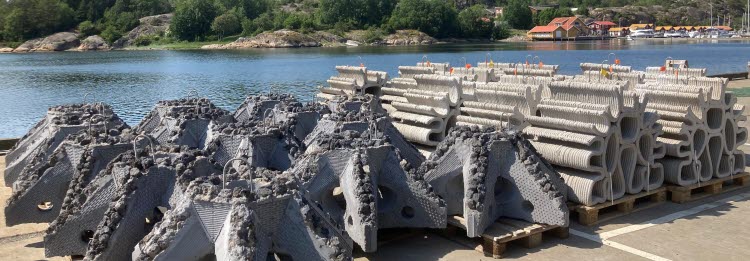
Since 2019, the County Administrative Board of Västra Götaland and the University of Gothenburg have been working to help preserve Sweden’s coral reefs.
“Coral reefs are the ocean’s most bio-diverse environments. We have previously had live coral reefs along the west coast that has been destroyed. By manufacturing and placing artificial reef structures in the sea, we hope to to restore these valuable habitats," says Anita Tullrot, Project Manager for LIFE Lophelia and Marine Manager at the County Administrative Board in Västra Götaland.
Scientists have investigated various materials that can help coral reefs recover.
“Slag from Höganäs is one material that has proven to have good properties,” says Björn Haase, who is responsible for by-products at Höganäs.
“The slag has a lot of small cavities where larvaes can creep in and settle. It also contains lime and other minerals, and when we have investigated the larvaes’ interest in different materials, they have been attracted to slag,” says Ann Larsson, Head of Research at the Tjärnö Marine Laboratory outside Strömstad, which is part of the University of Gothenburg.
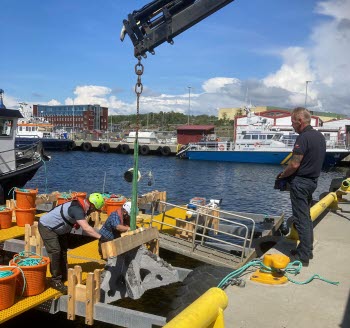
“We have tried to give the coral larvae the best possible conditions. My hope is that we will see live coral on the reefs within five years," says Anita Tullrot.
The researchers hope that these coral reefs will not only grow on the concrete structures, but also spread further, connect and form larger reefs. They will also spread the restoration method to other countries through a technical manual.
Photo: Susanna Strömberg and Anita Tullrot
FactThe project is run by the County Administrative Board of Västra Götaland together with the University of Gothenburg and the Department of Marine Sciences, and is funded by the European Union Grant agreement n° LIFE18 NAT/SE/000959, the Swedish Marine and Water Administration, the County Administrative Board of Västra Götaland and the University of Gothenburg. The project started in September 2019 with preparations and hiring of researchers. The first coral larvae that scientists could use in experiments came in February 2020. |
||