


By-products are restoring coral reefs on the Swedish west coast
“Coral reefs are the seas’ most biodiverse environments. We’ve had several live coral reefs along the west coast before, most of which have now been destroyed. By placing artificial reef structures, we hope to restore these valuable environments,” says Anita Tullrot, Manager for the project Life Lophelia at the Västra Götaland County Administrative Board.
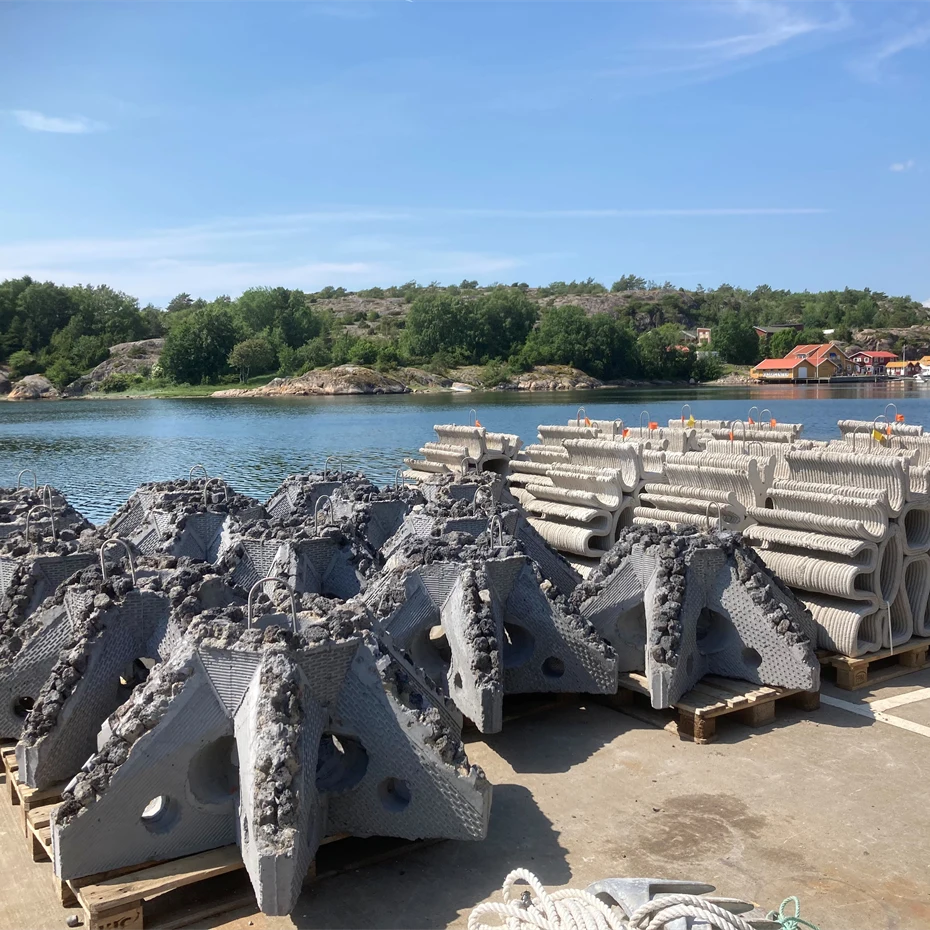
Behind the design of the reef structures are several years of research. The cold-water coral Lophelia pertusa thrives in strong currents but because the larvae are swept away on flat sea bottoms, they need something protruding to attach to. After experimenting in special aquariums, the researchers settled on the starshaped structure to which slag from Höganäs has been attached. The slag is a by-product from Höganäs’ production of metal powder.
“Our slag contains lime and other minerals and has proved to be useful for this,” says Björn Haase, Manager of Non-Metal products at Höganäs. “The slag is also full of small cavities where the larvae can find shelter and attach. We have tested several materials and found that they are attracted by slag in particular,” says Ann Larsson, a researcher at the University of Gothenburg. The six sites where the structures are placed are protected from fishing, including trawling and crab and lobster cages. It is also prohibited to anchor. Lophelia pertusa is slow growing, and the process to establish live coral reefs is expected to take a long time. Researchers will follow the development by filming every three years. “We have given the coral larvae the best conditions possible. My hope is that we will see live corals on the reefs within five years. They will be a boost for many different species, both sedentary and mobile, and increase the biodiversity in the area,” says Anita Tullrot.
Photo: Anita Tullrot