

Over 225 years of innovation
Explore some of the key milestones in our history:
17th century
Maria Sophia De la Gardie

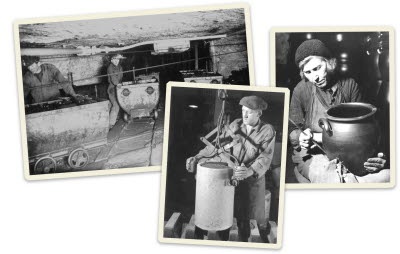
The Scanian War between Sweden and Denmark rendered mining operations impossible – the workers were called in for military service and Maria Sophia’s property was vandalised. It was not until the late 18th century that Höganäsbolaget, today known as Höganäs AB, was formed and resumed coal mining on a large scale.
1797
The coal mining company Höganäs AB is founded
1826
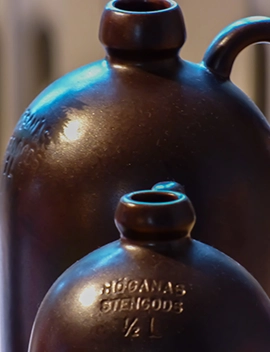
The ceramic era begins
1864
Workers’ residence, today's headquarters
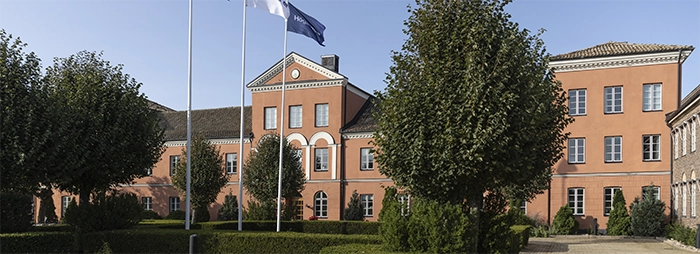
An elaborate workers’ residence with 130 apartments, named Nya Brukslängan, was built. Locally, it was nicknamed ‘Tre Kronor’ (Three Crowns) because of its supposed resemblance to the Royal Palace in Stockholm. With this building, Höganäsbolaget participated in the Paris Exhibition of 1867 and won a prize of 10,000 francs. This prize money became the foundation for the company’s own housing fund, which provided grants and loans to the mill’s workers who wanted to build single-family houses in the area.
In 1923, the Tre Kronor building became Höganäs’ headquarters and it remains so today.
1910
Sieurin invents the sponge iron method
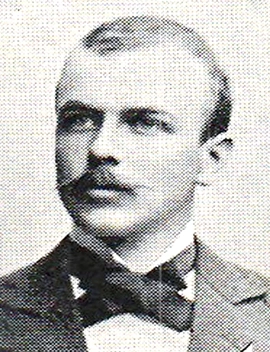
Later, Höganäs began grinding the reduced iron to powder, creating sponge iron powder. The product takes its name from its highly porous, sponge-like structure.
until the mid-1950s
Demand and expansion
1940 – 61
165 years of mining comes to an end
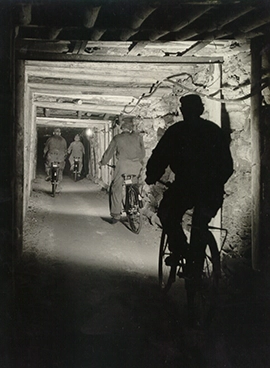
Underground mining within the group continued until 1979, when the last remaining mine in Bjuv was closed.
1946
Iron powder production begins
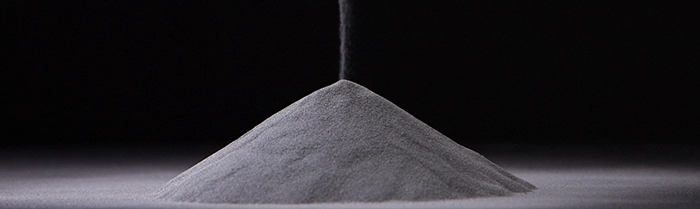
The first iron powder plant opened in Höganäs, and production rapidly took off. Within just a decade, iron powder had become one of the company's most important products. The powder is used in powder metallurgy applications, in products such as gears and precision components.
1950
Höganäs starts its journey in United States
Growing demand for iron powder led the company to build an ironworks in the United States. In 1950, Höganäs established its subsidiary, Hoeganaes Sponge Iron Corporation (HSIC). Just three years later, in 1953, the first plant was ready to produce iron powder. Expansion in the United States progressed rapidly. An additional tunnel kiln was built in 1956, followed by a plant for high-alloy powders in 1960. In 1969, a facility for water-atomised powders was built, with a further plant opening in 1980. A major R&D centre was inaugurated in 1982, followed by a mix station a few years later.
In 1968, Höganäs AB sold an 80% stake in Hoeganaes Corporation to Interlake. In 1999, Höganäs was required to sell its remaining 20% stake when GKN acquired Interlake. The transaction enabled Höganäs to market and sell metal powders in North and South America.
1963
Massive tunnel kiln starts producing sponge iron
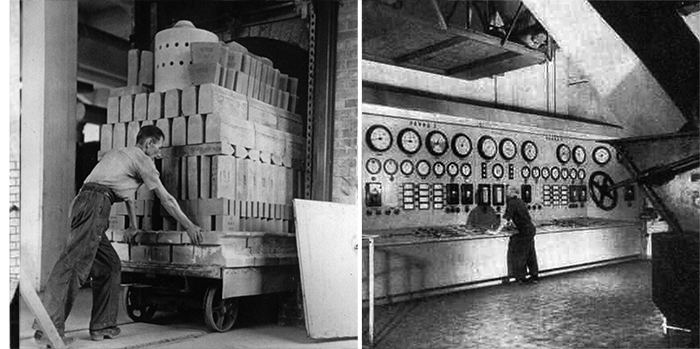
A new, high-tech sponge iron plant was inaugurated in Höganäs, featuring a 227-metre tunnel kiln, then the longest in the world. In 1970, a second tunnel kiln was commissioned. At 265 metres in length, it surpassed its predecessor to become the longest tunnel kiln in the world.
Today, Höganäs has three tunnel kilns in operation at its sponge iron plant in Höganäs.
1968 – 99
Global expansion
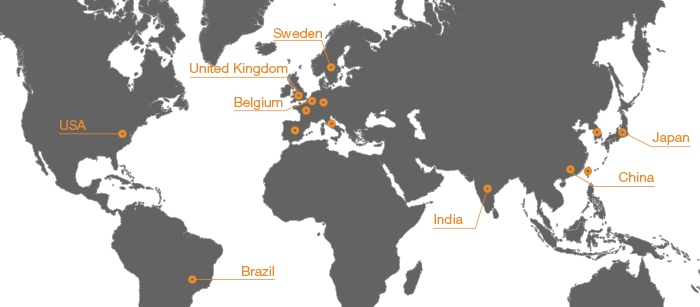
Höganäs' international expansion within the metallurgical industry accelerated from the late 1960s onwards, beginning with the establishment of a subsidiary in the United Kingdom in 1968. Over the following decades, the company strengthened its global presence through new subsidiaries in Germany (1978), France (1982), Belgium and Japan (both 1985), Italy and India (both 1986), Spain (1988), and Taiwan and South Korea (both 1990). The expansion continued into China in 1993. In 1999, after divesting Hoeganaes Corporation to GKN, Höganäs re-entered the North and South American markets by acquiring a Brazilian metal powder producer and establishing a new subsidiary in the United States.
During this period, Höganäs also established iron powder production operations in Belgium, Japan, China, India, and Brazil, and soon thereafter in the United Kingdom and the United States. Today, Höganäs has 15 production sites in 10 countries.
1973
Sydney Opera House
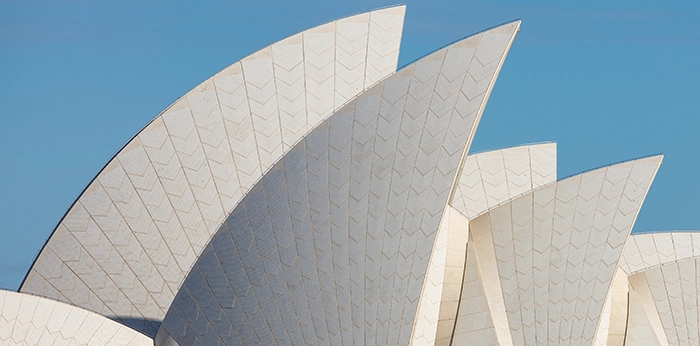
The Sydney Opera House was inaugurated, with around one million of Höganäs' ceramic tiles covering the facade
mid-1980s
Strong growth in metal powders
In the mid 80’s, the metallurgy business experienced strong growth. Several new products were launched during this period, for example: Distaloy®, Astaloy® and Somaloy®, all of which remain part of Höganäs' offering today.
1987
Höganäs privatised
Industrialist Ulf G. Lindén acquired the majority shareholding and transformed Höganäs into a privately owned company. A new group under the name Höganäs-Kanthal was formed. Metal powders formed one of five business areas. Divestments and restructuring continued in the group with the aim of focusing more and more on metallurgy. Due to the Swedish financial crisis, Höganäs was reintroduced on the stock exchange in 1994.
1990
The Distaloy plant is inaugurated
A new Distaloy® plant in Höganäs was inaugurated, with an annual capacity of 40,000 tonnes of Distaloy powder and 50,000 tonnes of customer mixes. The plant is highly automated and featured, among other things, automated carriers that transport containers throughout the facility without human intervention.
1992
PM school, sharing metal powder know-how
around the 2000s
Somaloy, a game changer in electric motors
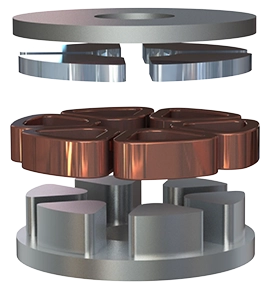
In the early 2000s, SMC technology started to be used in axial flux motors. In 2015, one such motor was featured in Koenigsegg's sports car 'Regera'.
Along the way, Höganäs also experimented with new applications for the technology. In the late 1990s, for example, the company developed electric bicycles powered by motors containing Somaloy.
2009
Customer Development Centre opens in Höganäs
Höganäs opened a Customer Development Centre in Höganäs, at the time named PoP Centre. Here customers, partners, and Höganäs engineers came together to develop new application areas for metal powders. By installing equipment and processes similar to those used by its customers, Höganäs could offer a place to test new materials, techniques, and process steps.
Today, Höganäs has Customer Development Centres in Sweden, India, United States, and China.
2012
Additive manufacturing
Höganäs acquired the start-up company Fcubic and launched Digital Metal to explore the potential of combining 3D printing, also known as additive manufacturing, with the company's expertise in metal powders and sintering. The business was divested in 2022.
Today, Höganäs continues to produce and supply powders for additive manufacturing.
2013
Höganäs privatised once again
Höganäs was delisted from the stock exchange and became a privately owned company again, with Lindéngruppen and Wallenberg Investments, each owning 50 percent.
2016
ArcX – tech centre for surface coating
Höganäs opened two ArcX technology centres for surface coating, one in Shanghai, China, and one in Höganäs, Sweden. ArcX is a network of surface coating technology centres dedicated to providing the highest level of technical expertise and equipment to the surface coating industry. Here, Höganäs support its customers in developing innovative surface coating solutions and creating new business opportunities.
Today, Höganäs operates ArcX centres in Sweden, Germany, United States, China, and India.
2018
Höganäs enters the ceramic powder market
Through an acquisition of H.C. Starck Group's Surface Technology & Ceramic Powder division, STC, in Germany, Höganäs entered the market for ceramic powders. Ceramic powders are used in a wide range of industrial applications to achieve properties such as increased wear resistance, thermal conductivity, and chemical durability.
The acquisition also included two production facilities in Germany.
2018
Next generation of electric drive solutions

2023
Science Based Targets initiative (SBTi)
2024
Höganäs introduces product-specific carbon footprints
Höganäs became the first metal powder producer to provide product-specific carbon footprints (PCFs), offering transparency on cradle-to-gate emissions for products with complete life cycle assessment (LCA) models. The calculations follow the ISO 14067:2018 standard and show the amount of CO2 equivalent emitted per kilogram of metal powder produced.
2025
Höganäs launches its re-portfolio